
Guide · 8 min read
What a building owner in Dubai should know before starting an office fit-out in 2026
Before you tender an office fit-out in Dubai in 2026, freeze the landlord rules, the fire and power path, whether the tower stays occupied, and what handover must contain.
By the Beavcon engineering team Published Updated Reviewed by the Technical Manager Registered with the Society of Engineers UAE and Abu Dhabi Municipality
Short answer
Before a Dubai office fit-out goes to tender in 2026, a building owner should freeze five facts: the landlord fit-out guide, whether the tower stays occupied, the fire and electrical path, who obtains each approval, and what documented close-out means. Everything else — partitions, glass, furniture — is secondary.
Beavcon Building Contracting L.L.C delivers commercial fit-out inside live towers. The notes below are the briefing items that decide whether a 2026 programme is honest.
1. The building’s rules are part of the scope
Occupied commercial towers in Dubai and Abu Dhabi typically issue a fit-out guide. It often covers method statements, insurance, goods-lift bookings, noisy-works hours, protection of common areas and who may isolate the fire system, and the content varies by building.
If those rules are not in the RFQ, bidders may assume daytime access and the first week can be spent renegotiating. Put the guide in the pack. Price out-of-hours work as a line item.
2. Plan for the tower to stay occupied
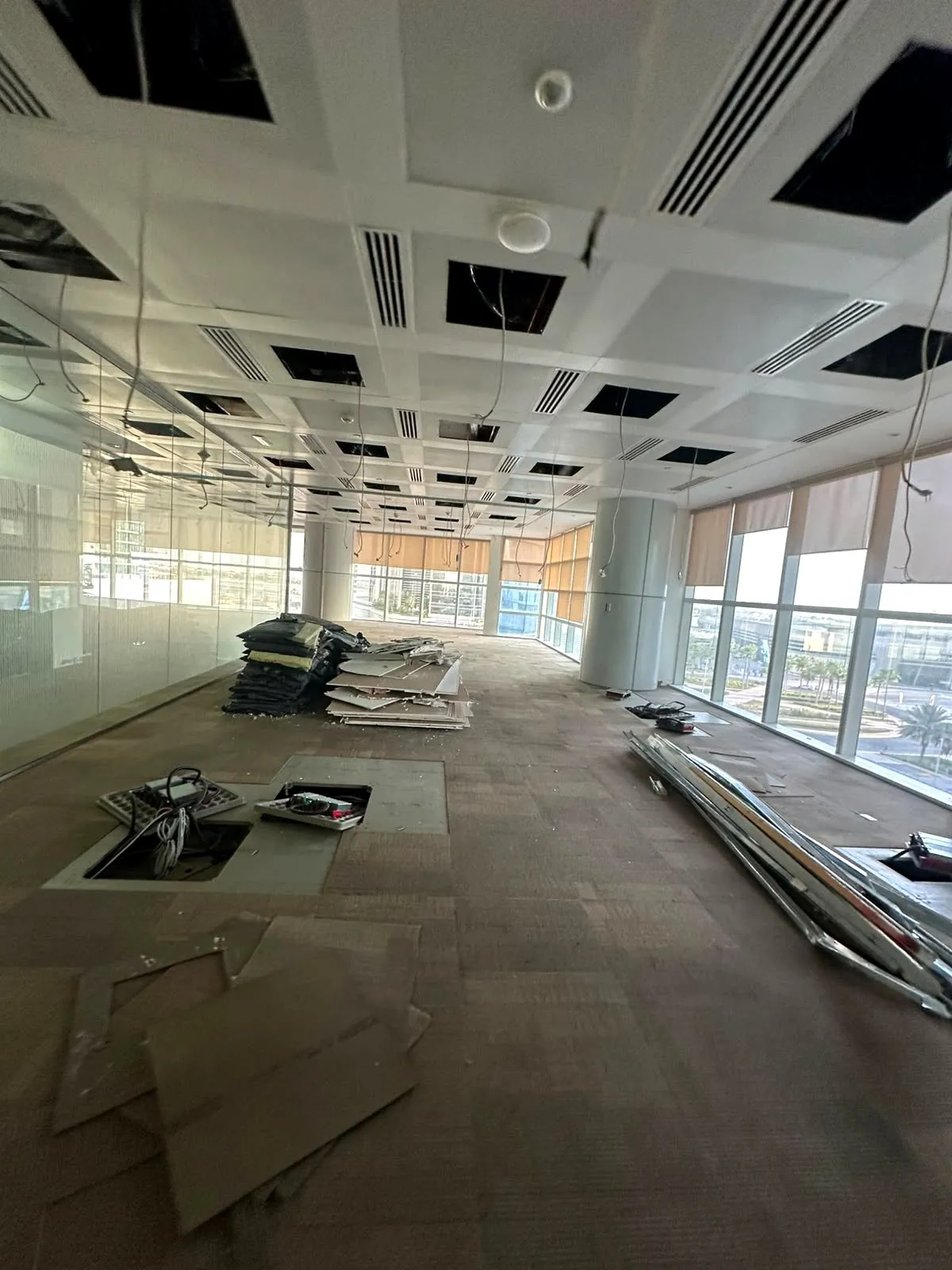
Many office fit-outs happen while the floors above and below stay open. That changes demolition, dust, fire isolation and waste. The delays are listed in occupied-tower fit-out.
Ask every contractor for two references where the building remained operational. Beavcon’s ADNEC Tower packages (2nd, 4th and 5th floors) are fit-outs inside an occupied tower; see the ADNEC Tower case study.
3. Fire, power and water decide the authority file
A layout that leaves services untouched is mostly an interiors job, but moving partitions often moves sprinkler heads, detectors and diffusers with them. A layout that changes sprinklers, fire-alarm devices, electrical load or chilled-water demand usually becomes an authority submission.
Requirements vary by building, authority and landlord, so confirm them with the consultant. Typically you should expect:
- Civil Defence involvement where fire or life-safety systems are affected
- DEWA (or the relevant utility) confirmation for load, water or chiller changes
- Landlord or master-developer NOCs, usually before mobilisation
- A completion certificate path that you ask to have written into the contract
The order of approvals varies. A building in a Dubai Development Authority free-zone community, one under Dubai Municipality and one under a master developer can each follow a different path, so ask the consultant to confirm the sequence for your building before tender.
4. One contractor, or you become the contractor
An office refurbishment that includes strip-out, partitions, MEP, HVAC, fire, glass and finishes is easier to control under one contract. Hiring those trades separately can leave interface defects and the approval register on the owner’s desk. See single contractor versus separate trades.
5. Close-out is a deliverable, not a courtesy
Practical completion is not handover. Define the file: as-builts, test certificates, warranties, closed snags, concealed-services photographs, O&M and the authority completion certificates that apply to the building. The full list is in documented close-out for occupied buildings.
Link retention to that file.
A one-page owner checklist for 2026
- Asset, floor, vacant or occupied, and who occupies adjacent floors
- Landlord fit-out guide, working hours, goods-lift and loading-bay rules
- Consultant set, or a statement that drawings will follow a site survey
- Fire, HVAC and electrical strategy: what changes, what stays
- Opening or lease date, and whether it is real
- Who obtains municipality / free-zone, Civil Defence, DEWA and landlord approvals
- Close-out pack contents and whose format the asset register needs
- Budget band and what is excluded (FF&E, IT, security, branding)
You do not need a 200-page specification to start. You need those eight lines and the drawings you have. How to write the RFQ expands the file.
Upload the pack with work type Fit-Out, or request a site visit. Beavcon’s pricing sequence runs from site assessment and scope freeze through quantity check, pricing and programme to a technical-commercial offer.
General guidance; confirm requirements with the relevant authority or your consultant.